

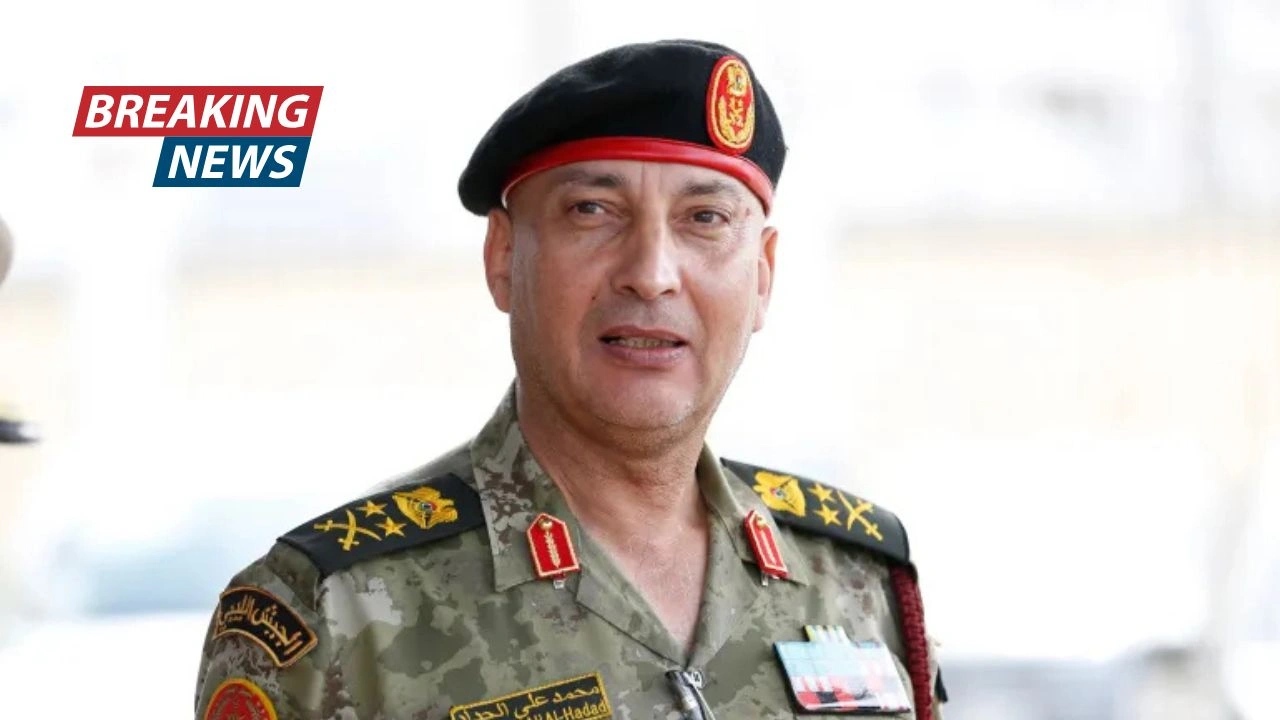
On Tuesday, the Chief of Staff of the Libyan Army, Lieutenant General Mohammed Ali Ahmed al-Haddad, tragically lost his life in a plane crash while returning from an official visit to Ankara, Turkiye. The incident also claimed the lives of four senior Libyan military officers and three crew members.
Details of the Tragic Incident
The private aircraft, en route to Tripoli, experienced an electrical malfunction shortly after takeoff from Ankara Esenboga Airport. According to Turkish officials, the plane requested an emergency landing at 17:33 GMT but lost communication shortly after. Despite efforts to guide the aircraft back to the airport, it vanished from radar at 17:36 GMT during its descent. The wreckage was later found near Kesikkavak village in Turkiye’s Haymana district, and search and rescue operations were promptly launched.

Who Was General Mohammed Ali Ahmed al-Haddad?

General al-Haddad was the highest-ranking military official in Libya, serving as the Chief of the General Staff. He had held this position since 2020, working tirelessly to unite the fractured Libyan military. Libya, since the fall of Muammar Gaddafi in 2011, has been deeply divided, with competing factions vying for power. Al-Haddad was a pivotal figure in the United Nations-recognized Government of National Unity (GNU) based in Tripoli, striving to bring stability to the country’s military by consolidating control and reducing militia influence.
Efforts for Unity and Military Reform
General al-Haddad was widely respected in Libya, especially for his commitment to building a unified military force in the western part of the country, where powerful militias exert significant control. His leadership was seen as essential in attempting to unify the country’s fractured military institutions, thus contributing to broader peace efforts. Al-Haddad was known for his charisma, strength, and his unwavering belief in the rule of law, democracy, and transitioning Libya to civilian governance. His death has deeply impacted both the western administration and even the rival eastern faction, with figures like Khalifa Haftar, who controls the east, expressing condolences.
Al-Haddad’s Role in Regional Diplomacy
During his visit to Turkiye, General al-Haddad met with key Turkish military figures, including Defence Minister Yasar Guler and Selcuk Bayraktaroglu. While Turkiye has traditionally supported the Tripoli-based GNU, it has been increasingly strengthening its ties with the eastern administration under Khalifa Haftar. Al-Haddad’s trip to Ankara underscored Libya’s complex diplomatic landscape, with both internal and external forces influencing the path to unity.
What We Know About the Plane Crash
The plane involved in the crash was a 37-year-old Dassault Falcon 50 jet. It departed from Ankara’s Esenboga Airport at 17:17 GMT, headed for Tripoli. The jet experienced an electrical malfunction just 16 minutes into the flight, prompting the crew to declare an emergency and attempt a return to the airport. Unfortunately, the aircraft lost communication and disappeared from radar shortly after. Despite efforts by air traffic controllers to guide the plane back, the crash occurred just 19 minutes after takeoff.
The Aftermath and National Mourning
The tragic incident has sent shockwaves across Libya, with citizens and officials alike mourning the loss of General al-Haddad, who was seen as a unifying figure in the midst of deep political divisions. The Libyan government has declared three days of national mourning in honor of the military leader’s death.
General Mohammed Ali Ahmed al-Haddad’s untimely death in the plane crash has deeply affected both Libya’s military and its political landscape. His dedication to military reform and national unity made him a respected figure, and his loss represents a significant blow to efforts to stabilize Libya. As the nation mourns, the tragedy has raised questions about the future of Libya’s fractured military and the uncertain diplomatic landscape.