


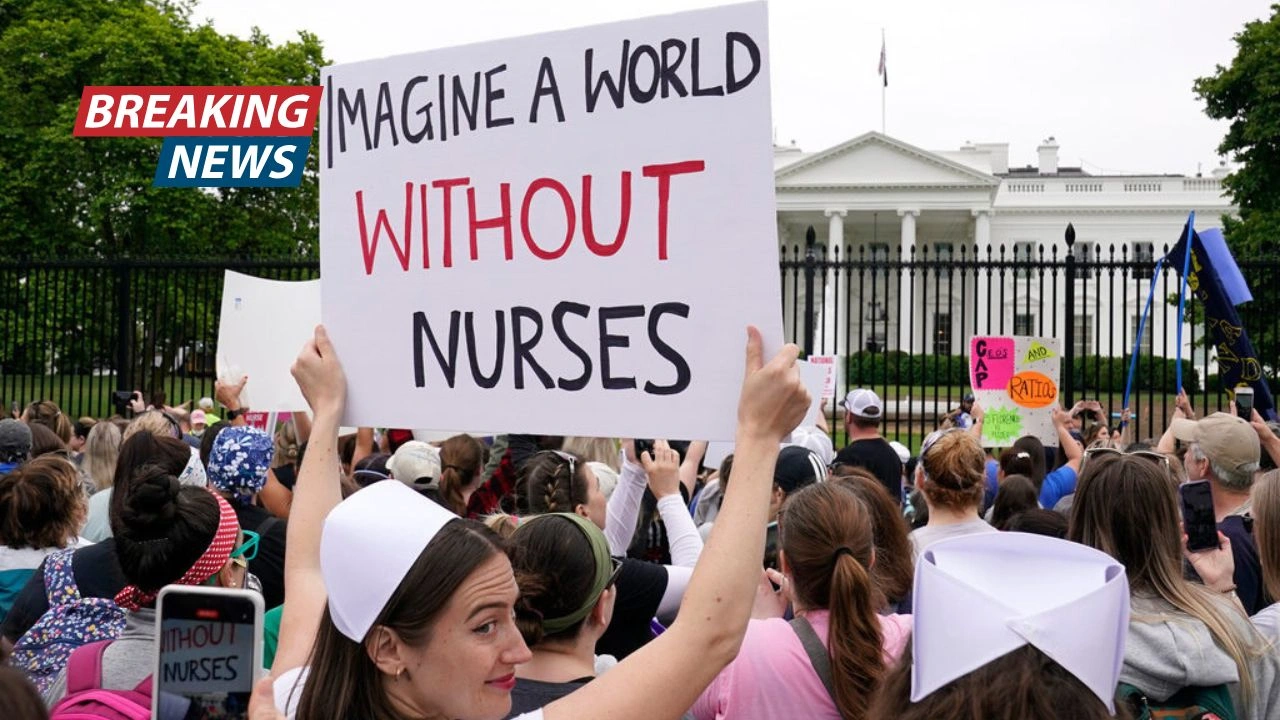
A coalition of Republican lawmakers is leading the charge to reverse the Trump administration’s decision to cap student loans for graduate nursing students, a move that has sparked significant opposition within the nursing community.
Background of the Loan Cap Controversy
Under President Donald Trump’s “One Big Beautiful Bill Act,” a provision was introduced that imposed lifetime borrowing limits on student loans for graduate and professional degrees. While various professional degrees were eligible for higher loan limits of up to $200,000, nursing was notably excluded from this list. As a result, graduate nursing students are restricted to borrowing a maximum of $100,000, which no longer covers the full costs of many advanced nursing programs.



This limitation has led to concerns within the nursing sector, with professionals warning that it could undermine patient care by restricting the financial accessibility of graduate education. Nursing organizations argue that this policy change threatens the future of patient care by limiting nurses’ ability to fund their education.
Republicans Take Action
Rep. Mike Lawler, a Republican from New York, is spearheading efforts to introduce legislation that would add nursing to the list of “professional” degrees eligible for higher loan limits. Along with his colleagues — Reps. Jen Kiggans (Virginia), Don Bacon (Nebraska), Brian Fitzpatrick, and Rob Bresnahan (Pennsylvania) — Lawler aims to ensure that graduate nursing programs, along with other fields like occupational therapy, social work, audiology, and physician assistants, can access the higher loan limits.
According to Lawler, the solution is simple. “It’s a very easy way to solve this,” he told Politico, emphasizing that this change is necessary, particularly given the current healthcare shortage in the U.S. “At a time when our nation is facing a health care shortage, especially in primary care, now is not the time to cut off the student pipeline to these programs,” he added. Lawler and his allies were among 140 bipartisan lawmakers who signed a letter urging the Education Department to revisit its decision.
Lawmakers Call for Change

Kiggans, who is also a nurse practitioner and serves as the vice co-chair of the House Nursing Caucus, echoed Lawler’s sentiments. In a recent conversation with Education Undersecretary Nicholas Kent, Kiggans stressed that excluding nursing from the list of professional degrees was unfair and disrespectful to nurses, particularly in light of the nation’s ongoing nursing shortage.
“If the changes go forward, nursing students will face these new borrowing limits starting on July 1, 2026,” Kiggans said, emphasizing that this could have long-term consequences for the healthcare system.
Education Department’s Response
In response to the backlash, the U.S. Department of Education issued a press release in late November claiming that 95% of nursing students borrow below the new loan limits and would not be affected by the caps. The Department also explained that the term “professional degree” is used internally to define programs eligible for higher loan limits, rather than as a judgment of the program’s value or importance.
According to Ellen Keast, the Department’s press secretary for higher education, “Congress chose not to change the existing definition of professional student, but they can amend the law at any time, and the agency will issue responsive regulations.” The Department has yet to indicate if they will reconsider the decision.
Nursing Organizations Speak Out
Nursing organizations, including the American Nurses Association (ANA) and the American Association of Colleges of Nursing (AACN), have strongly criticized the new loan caps. “At a time when healthcare in our country faces a historic nurse shortage and rising demands, limiting nurses’ access to funding for graduate education threatens the very foundation of patient care,” said Jennifer Mensik Kennedy, president of the ANA.
The AACN further stated, “Excluding nursing from the definition of professional degree programs disregards decades of progress toward parity across the health professions and contradicts the Department’s own acknowledgment that professional programs are those leading to licensure and direct practice.”