


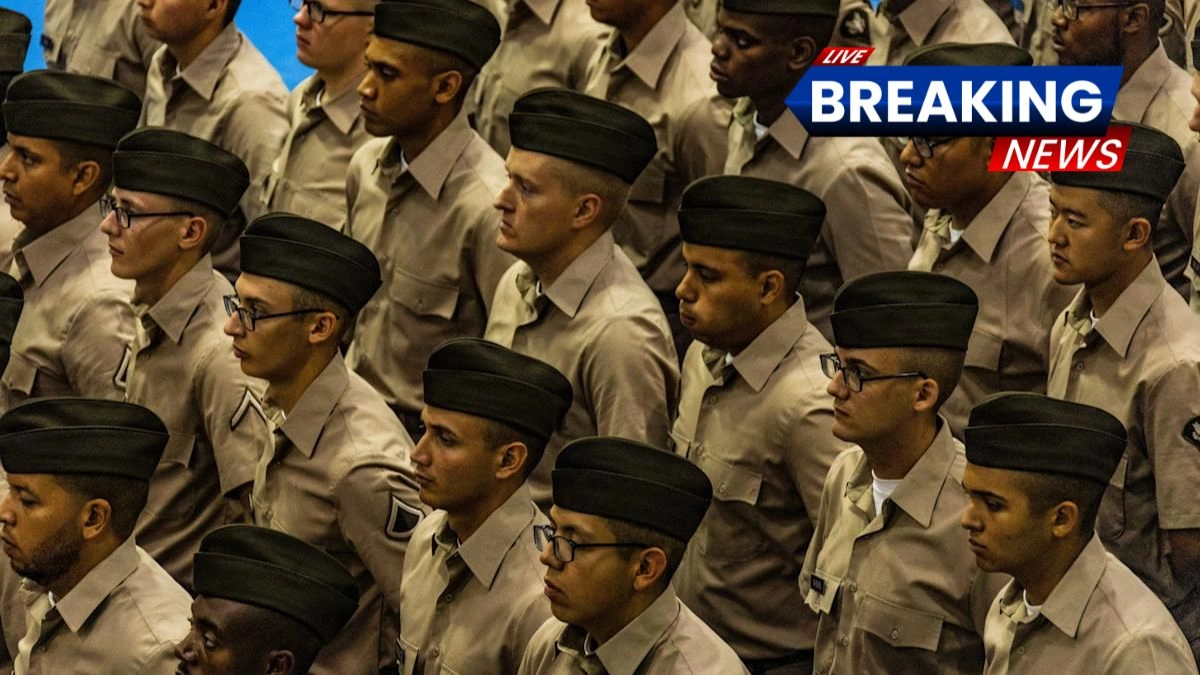
A recent Pentagon report has revealed that the Army and Navy overstated the academic qualifications of some recruits, leading both branches to surpass federal limits on low-scoring enlistees using preparatory courses.
Misrepresentation of Recruits’ Qualifications
The Pentagon’s Inspector General released a report stating that the Army and Navy had misrepresented the academic qualifications of certain recruits by counting test scores earned after the recruits completed preparatory programs, rather than the scores obtained before joining the courses.




These preparatory courses, designed as pre-boot camps, aim to help recruits with low entrance exam scores or fitness deficiencies. They are meant to improve recruits’ readiness for military service by addressing these shortfalls in a matter of weeks or months.
By counting the improved test scores after completing these courses, the Army and Navy managed to exceed the federal cap on low-scoring recruits without informing the Secretary of Defense, as required by the regulations.
The Pentagon, however, disputes the report’s findings, arguing that the final test scores after the preparatory courses should be the ones considered valid.
Impact on Recruitment and Federal Limits

Federal law sets strict limits on the number of recruits who can fall into Category IV, which includes those with low academic scores between the 10th and 30th percentiles on the Armed Forces Qualification Test (AFQT).
The category is capped at 4% of the total recruits for each year, as these individuals tend to have lower trainability and job performance compared to other recruits.
This limitation ensures that the military attracts enough qualified individuals for highly technical roles, such as those in cyber operations, intelligence, and special operations, which require strong academic skills.

When taking into account only the scores from after the preparatory courses, the Navy would have had more than 11% of its 2025 enlistments classified as Category IV recruits.
By using pre-course test scores, that number would have exceeded the federal limit, showing a stark contrast. The Army similarly surpassed the 10% threshold for Category IV recruits, although the exact number was not specified.
Context of a National Recruiting Crisis
These findings are released amid a recruiting crisis faced by the Army and Navy in recent years.
Over the last few years, both services have struggled to meet their recruitment targets, with nearly 75% of young Americans unable to meet the physical and academic requirements for military service.
The situation is further compounded by a declining interest in military careers, making creative and effective recruiting strategies crucial for the armed forces.
Pentagon’s Defense and Future Plans
In response to the Inspector General’s report, William Fitzhugh, the acting assistant secretary of defense for manpower and reserve affairs, clarified that improving recruits’ academic skills is a primary goal of the preparatory courses.
He explained that enhancing academic performance and improving AFQT scores allow recruits to pursue a broader range of military occupations, benefiting both the recruits and the military services.
Despite the Pentagon’s defense, a previous Inspector General report raised concerns about the Army’s preparatory course, citing less stringent testing standards and challenges faced by recruits with English as a second language. The Pentagon disputed those findings as well.
The ongoing challenges in military recruitment have led to the use of preparatory courses, which, while helpful in addressing recruits’ academic deficiencies, have raised questions about their compliance with federal regulations.
The Pentagon’s disputes regarding the findings indicate a broader debate over how best to balance recruitment goals with maintaining high standards for military readiness.