

The United States has imposed visa bans on five European individuals, including a former European Union commissioner, accusing them of pressuring tech companies to suppress and censor American viewpoints they disagree with.
US Secretary of State’s Statement on Visa Bans
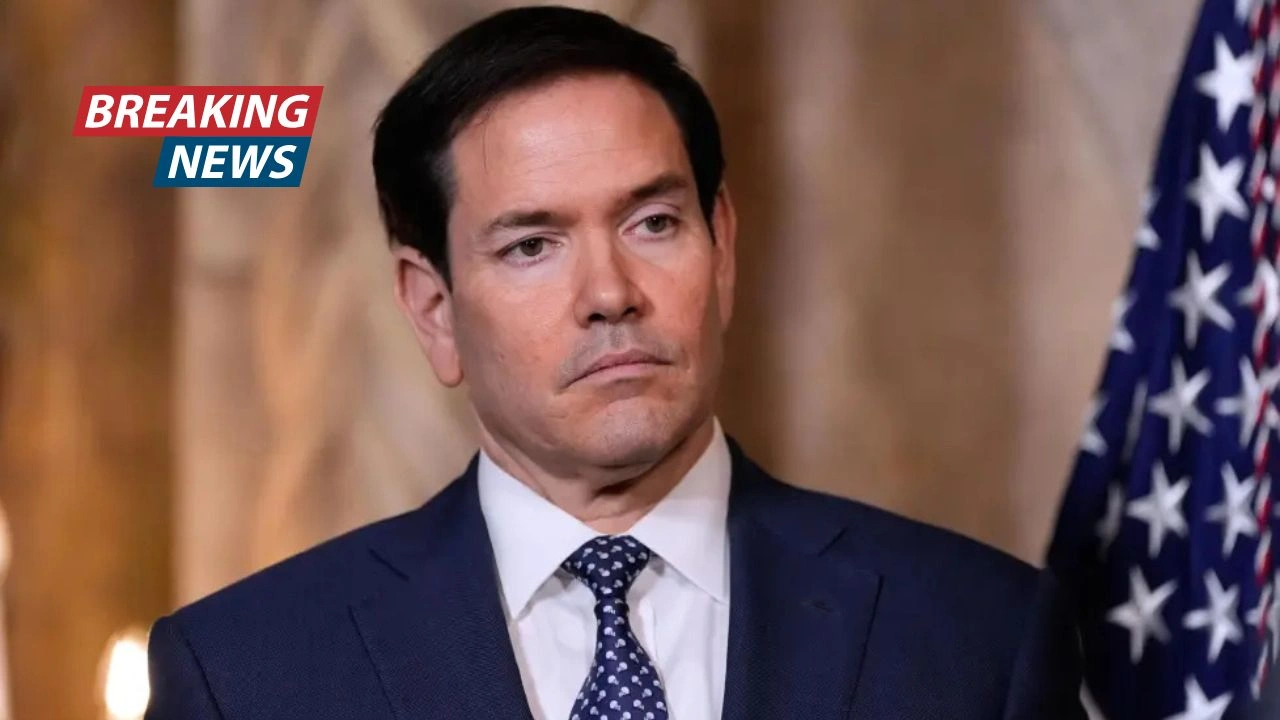
In a statement released on Tuesday, US Secretary of State Marco Rubio labeled these individuals as “radical activists” who have been involved in “censorship crackdowns” against American speakers and businesses. Rubio expressed concern over what he described as organized efforts by European ideologues to coerce American platforms into punishing American viewpoints.



“For far too long, ideologues in Europe have led organized efforts to coerce American platforms to punish American viewpoints they oppose,” Rubio stated on X.
The Trump administration is now making it clear that it will no longer tolerate these kinds of actions, accusing foreign states of extraterritorial censorship.
Thierry Breton and the EU Digital Services Act (DSA)
One of the most prominent individuals targeted by the visa ban is Thierry Breton, the former European Commissioner for the Internal Market from 2019 to 2024. Sarah Rogers, Undersecretary for Public Diplomacy, described Breton as the “mastermind” behind the EU’s Digital Services Act (DSA), a groundbreaking piece of legislation designed to address online hate speech, misinformation, and disinformation.
Rogers also criticized Breton for using the DSA to intimidate Elon Musk, the owner of X (formerly Twitter), especially ahead of a Trump interview Musk conducted during the 2024 presidential campaign. The US sees this as a form of direct interference with American media.
Breton’s Response to the Visa Ban
In response to the US’s actions, Breton denounced the visa bans as a “witch hunt” and compared them to the McCarthy era, when accusations of communist sympathies led to the downfall of several American officials.
Other Targeted Individuals
Other individuals named in the visa bans include Imran Ahmed, the CEO of the Centre for Countering Digital Hate; Josephine Ballon and Anna-Lena von Hodenberg, leaders of the German organization HateAid; and Clare Melford, who heads the Global Disinformation Index (GDI).
European Reactions to the US Decision

The European Commission strongly condemned the US’s visa restrictions, asserting that the European Union has the sovereign right to regulate economic activities within its borders, in line with democratic values and international commitments. The Commission emphasized that the EU’s digital rules aim to create a fair and secure environment for all companies without discrimination.
French President Emmanuel Macron also criticized the US’s actions, calling them an attempt to undermine European digital sovereignty. Macron wrote on X that such measures aimed at dictating European rules from outside the continent were unacceptable.
French Minister for Europe and Foreign Affairs Jean-Noel Barrot echoed Macron’s sentiments, emphasizing that the DSA is a law democratically adopted by the EU and does not apply extraterritorially.
German Foreign Minister Johann Wadephul also condemned the US decision, stating that the DSA was meant for Europe and has no extraterritorial effects.
Reactions from HateAid and the GDI
Leaders of HateAid, Ballon and von Hodenberg, argued that the visa bans are an attempt to obstruct the enforcement of European law against US corporations operating within the EU. They vowed not to be intimidated by what they called accusations designed to silence advocates for human rights and freedom of expression.
A spokesperson for the GDI referred to the US action as “immoral, unlawful, and un-American,” describing it as an authoritarian attack on free speech and an egregious violation of democratic principles.
Rising Tensions Between the US and Europe
These visa bans follow the Trump administration’s publication of a National Security Strategy, which accused European governments of censoring free speech and suppressing opposition to immigration policies. The DSA has become a key point of contention in US-EU relations, with US conservatives labeling it a tool of censorship aimed at stifling right-wing viewpoints, an accusation that Brussels vehemently denies.
The DSA requires large tech platforms to provide transparency in content moderation decisions and offers users more control and accountability in managing online interactions. It also mandates that researchers can access data to study online risks such as children’s exposure to harmful content.
EU Fines and Further Escalation
Tensions between the US and Europe escalated when the EU fined Musk’s X platform for failing to meet DSA transparency requirements, especially concerning advertising and user verification.
In response, the US indicated that key European companies, including Accenture, DHL, Mistral, Siemens, and Spotify, could face similar actions from Washington in retaliation. The US has also raised concerns over the UK’s Online Safety Act, which imposes content moderation requirements similar to the DSA. The White House suspended a tech cooperation deal with the UK, citing opposition to the UK’s digital rules.